Table of Contents
1. How Dirty Solar Panels Affect Energy Output
2. Why Central Coast Homes Face Extra Soiling Challenges
3. What Professional Solar Panel Cleaning Involves
4. How Often Should You Clean Your Solar Panels
5. Frequently Asked Questions
6. Keep Your Solar System Working for You
How Dirty Solar Panels Affect Energy Output
You invested good money in a solar system. You did your research, picked the right installer, and watched your electricity bills come down. But slowly, without you noticing, that performance starts to drift.
The culprit is usually sitting right there on your roof: a layer of grime that’s been quietly building up ever since your last clean.
Solar panels work by allowing sunlight to pass through the glass surface and reach the photovoltaic cells underneath. Anything sitting on top of that glass blocks light from getting through. Less light means less electricity generated, which means a higher reliance on grid power and a bigger bill at the end of the quarter.
What the numbers actually look like
The energy loss from soiled panels depends heavily on what type of material is coating the surface. Light dust and pollen typically reduce output by a small percentage, but the real damage comes from more concentrated soiling.
Bird droppings are one of the worst offenders. Because they tend to land in small concentrated spots rather than spreading evenly, they can cause what is known as hot-spot shading, where a small covered area on one cell creates a disproportionate drag on the output of the entire panel string. Even a single dropping on the wrong part of a panel can reduce that panel’s contribution significantly.
Salt film from coastal air is another major factor, and one that affects Central Coast homes more than inland properties. Over weeks and months, microscopic salt particles land and accumulate on the panel surface, creating a hazy film that scatters incoming light before it can reach the cells.
Figure 1: Estimated Energy Output Loss by Soiling Type
| Soiling Type | Estimated Output Reduction | How Quickly It Builds |
| Light dust and pollen | Up to 5% | Weeks to months |
| Bird droppings (spot coverage) | Up to 40% on affected cells | Any time |
| Lichen and organic growth | Up to 50% on affected cells | Months to years |
| Salt film (coastal areas) | 10 to 20% or more | Ongoing, season by season |
| Combined coastal soiling | 20 to 30% or more | Cumulative over 6 to 12 months |
The table above uses estimated ranges based on industry studies and should be used as a guide. The actual impact on your system will depend on your panel age, tilt angle, shading from nearby trees, and how long soiling has been left untreated.
Why Central Coast Homes Face Extra Soiling Challenges
The Central Coast sits at that sweet spot where coastal salt air meets inland humidity, bushland surroundings, and significant bird activity. It is a beautiful place to live, but it does mean your solar panels are working harder than those of a homeowner in a dry inland suburb.
Salt air and humidity
Living within a few kilometres of the ocean means your home is regularly exposed to airborne sea spray. Panels on the coast tend to develop a salt film much faster than panels further inland, and because humidity helps that film bond to the glass surface, it does not simply wash off in the rain.
Lichen
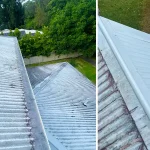
The Central Coast experiences strong lichen growth in all areas. This fungus grows on most solar panels on the Central Coast and after a few years, can cause serious blockages to your energy output. Nearly 100% of systems have lichen on them by the age of five years old.
Bird activity
If your roof has panels, your roof probably has birds. Particularly near bushy areas and waterways, which are everywhere on the Central Coast, bird traffic across rooftops is constant. Each visit leaves behind soiling that degrades performance.
Keeping the entire exterior of your home clean makes a real difference to its long-term condition. Learn more about our house soft washing service and how a full exterior refresh works.
What Professional Solar Panel Cleaning Involves
There is a right way and a wrong way to clean solar panels. The wrong way involves pressure washing, which risks forcing water into panel seals, causing delamination, and potentially voiding your manufacturer warranty. It also means walking on your roof to get close enough, which is a safety risk and can damage tiles or roofing material.
The right way involves the right tools and the right technique.
How the Shine Bright method works
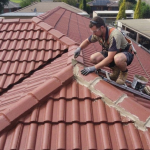
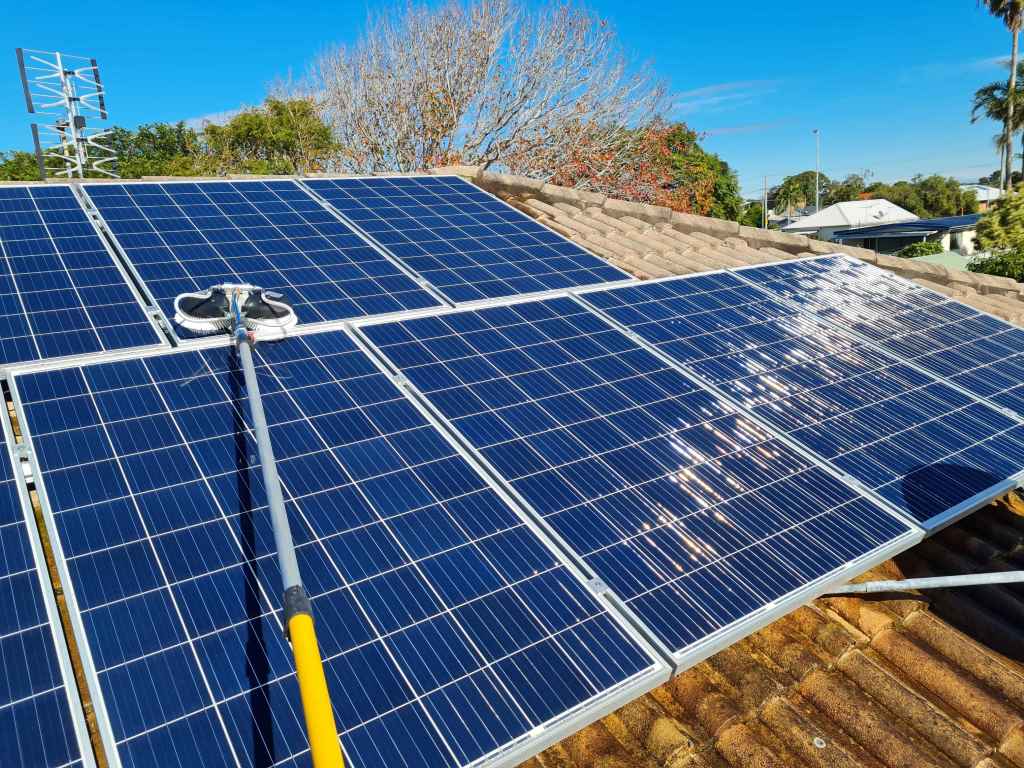
At Shine Bright Property Maintenance, we use a carbon-fibre water-fed pole to reach your panels safely from ground level or a stable position, with no roof walking required. The brush head is soft-bristled to provide effective scrubbing without scratching the panel surface or damaging seals.
The water we use is purified through a portable filtration unit. Tap water contains dissolved minerals that, when dried on your panels, leave behind spots and streaks that scatter light just like the original grime did. Purified water dries without leaving any residue at all, giving your panels a genuinely clean surface rather than trading one film for another.
Figure 2: Professional Solar Panel Cleaning Process (Shine Bright Method)
| Step | What Happens | Why It Matters |
| 1. Satellite image quote | Assess panel layout, access and soiling level | Accurate scope, no surprises |
| 2. Carbon-fibre pole setup | Extendable pole used to reach all rows safely | No walking on panels, no roof damage |
| 3. Soft-bristled brush scrub | Gentle agitation removes lichen, grime and bird droppings | Safe on panel surface and seals |
| 4. Purified water rinse | Deionised water leaves zero water spots | Streak-free finish, maximum light transmission |
While we are on the roof doing your solar panels, it is also a great time to check your gutters. Find out more about our gutter cleaning service and why combining services saves you time and money.
How Often Should You Clean Your Solar Panels
If your solar panels have a tilt under 10 degrees, that is, they are flat, then a clean every 6-12 months is recommended. For coastal properties on the Central Coast, every 36 months is a good rule of thumb to keep lichen at bay, but we would never allow more than 5 years to go by between cleans. Your schedule also depends on how much bird activity you see, how close you are to the ocean, and whether you have significant tree cover nearby.
A good way to check whether your system is underperforming is to compare your current generation figures with the expected output from your installer’s original estimate. Most solar inverters now have monitoring apps that show real-time and historical production data. If your system is generating noticeably less than expected during clear weather, soiling is one of the first things worth investigating.
Rain does help, but only to a point. Light rain removes loose surface dust but does not dislodge sticky residues, lichen, bird droppings, or salt film. Think of it the same way you would think about your car: the rain might remove the top layer of dust, but after a year without a proper wash, the grime has built up into something that needs real scrubbing to shift.
Figure 3: Recommended Solar Panel Cleaning Frequency by Environment
| Environment Type | Recommended Frequency | Key Reason |
| Standard suburban home | Once every 36 months | Dust and pollen accumulation |
| Coastal property (Central Coast) | Every 24-36 months | Salt air and humidity accelerate soiling |
| Near bushland or trees or flat tilt | Every 6-12 months | High leaf litter, sap and bird activity |
| Properties with heavy bird traffic | Every 6 months | Spot soiling from droppings reduces output fast |
Frequently Asked Questions
Q: Will cleaning my solar panels actually make a measurable difference to my electricity bill?
Yes, in most cases. If your panels have accumulated a few seasons or more of coastal soiling, a professional clean typically restores a meaningful amount of output. The exact improvement depends on how dirty your panels are and your system size, but any increase in self-generated electricity is electricity you are not purchasing from the grid.
Q: Can I clean my solar panels myself with a hose?
A garden hose will remove loose surface dust, which is similar to what rain already does. It will not remove salt film, bird droppings, lichen, or built-up grime. For a meaningful performance restoration, you need the right brush, the right technique, and purified water. Pressure washing is not recommended as it risks damaging panel seals and voiding your warranty.
Q: Do you need to come inside to clean solar panels?
No. The cleaning is carried out entirely from outside using our extended carbon-fibre pole system. You do not need to be home in most cases and send before and after photos of the panels if you aren’t home when we carry out the work.
Keep Your Solar System Working for You
Your solar system was designed to reduce your power bills and your environmental footprint for decades. But it can only do that job if the panels are actually able to absorb sunlight properly. On the Central Coast, where salt air, pollen, and bird activity all conspire against panel performance, regular professional cleaning is not a luxury. It is routine maintenance.
The good news is that a proper clean by someone who knows what they are doing is quick, affordable, and makes a genuine difference. You will likely see the impact in your next monitoring report.
Shine Bright Property Maintenance offers our full range of Central Coast cleaning services for both residential and commercial properties across the entire Central Coast region.