Table of Contents
1. How Gutters Become a Bushfire Risk
2. What Gutter Guard Actually Does in a Fire Event
3. Types of Gutter Guard and Their Ember Protection Ratings
4. Why Gutter Guard Is Not a Set-and-Forget Solution
5. What to Do Before Fire Season on the Central Coast
6. Frequently Asked Questions
7. Protect Your Home Before the Season Starts
How Gutters Become a Bushfire Risk
During a bushfire event, burning embers are carried by the wind and land on and around homes ahead of the fire front. This process, known as ember attack, is responsible for the majority of home ignitions during bushfires in Australia. An ember can travel several kilometres from an active fire before landing.
Where an ember lands matters enormously. Embers that land on lawns or paths are generally not a significant risk because there is little to catch fire. Embers that land in gutters full of dried leaf litter, bark and debris are a completely different situation.
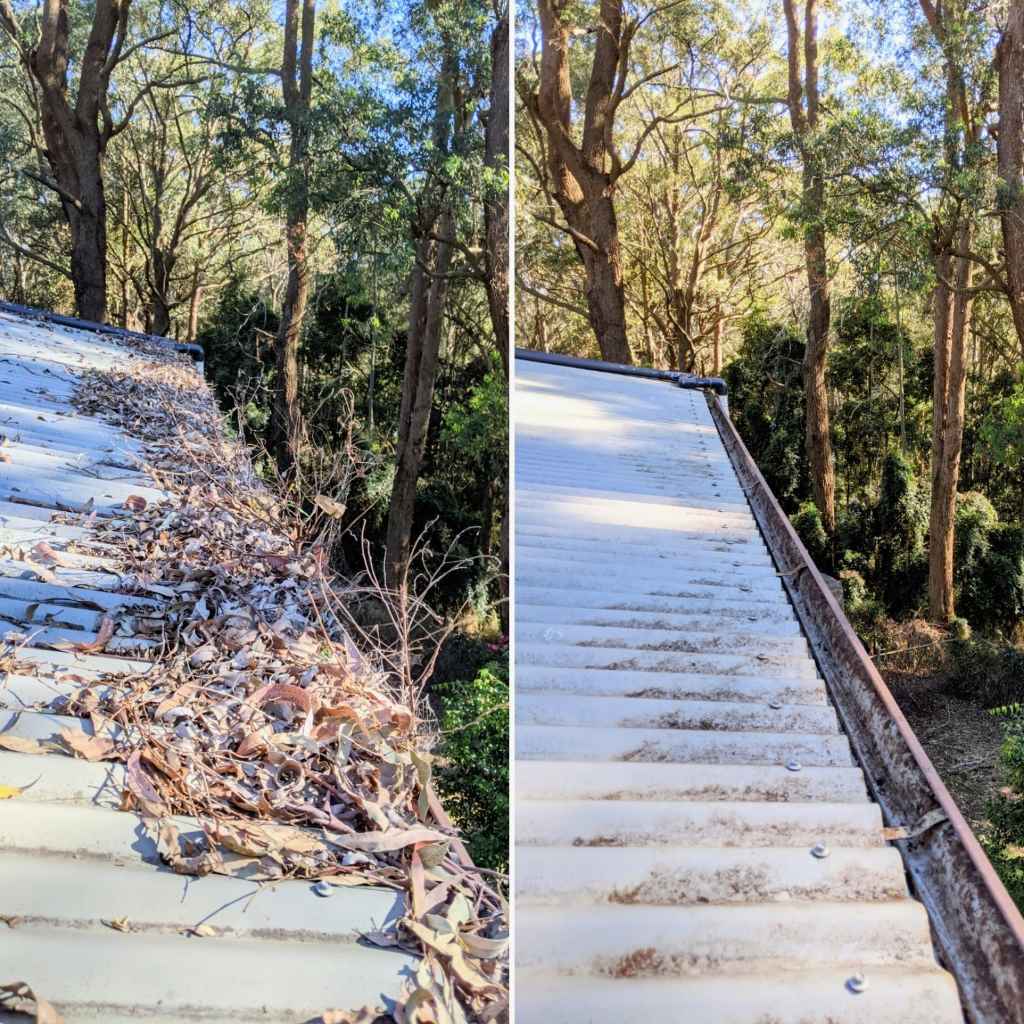
Gutters in bushfire-prone areas fill up with combustible material throughout the year. Autumn leaves, bark, seed pods and general tree debris accumulate and dry out. When a burning ember lands in this material, it can ignite quietly and build before anyone is aware there is a fire starting inside the gutter. By the time it becomes visible, the roof structure above may already be at risk.
Many homes on the Central Coast sit in or adjacent to bushland. Areas including Yarramalong, Kulnura, Mangrove Mountain, Central Mangrove and parts of Gosford and Wyong are all close to significant bush. Even homes in more suburban areas often have mature tree coverage that keeps gutters full year-round.
Figure 1: How Ember Attack Leads to Gutter Ignition
| Stage | What Happens |
| Embers generated | Burning debris is carried by wind from the fire front, sometimes kilometres ahead |
| Ember lands in gutter | Dried leaf litter and bark in gutters catches the ember and begins to smoulder |
| Smouldering builds | Without intervention, the smouldering spreads through the debris in the gutter |
| Ignition of roof structure | Sustained heat and flame ignites the timber fascia board, eave or roof cavity |
| Structure fire begins | Fire enters the roof cavity and spreads rapidly through the internal structure |
What Gutter Guard Actually Does in a Fire Event
Gutter guard, when correctly rated and installed, provides two layers of protection in an ember attack scenario.
First, it reduces the amount of combustible debris that accumulates in the gutter in normal conditions. Less debris means less fuel available if an ember does make it into or onto the system.
Second, a correctly rated ember guard mesh prevents burning embers from entering the gutter channel directly. The mesh sits over the gutter and acts as a physical barrier. Embers that land on the mesh may scorch it but cannot drop into a fuel-filled gutter and ignite the debris below.
This is why the quality and rating of the gutter guard product matters so much. A thin plastic mesh designed primarily to keep leaves out does not provide the same protection as a steel ember-rated guard product tested to Australian bushfire standards. The difference between the two can be significant in a real fire event.
Types of Gutter Guard and Their Ember Protection Ratings
Not all gutter guard products are designed with bushfire protection in mind. When evaluating options for a bushfire-prone property on the Central Coast, the key specification to look for is compliance with Australian Standard AS3959, which relates to Construction of Buildings in Bushfire-Prone Areas, or more specifically, products that have been tested and rated for ember protection under relevant standards.
Figure 2: Common Gutter Guard Types and Their Ember Protection Suitability
| Guard Type | Material | Ember Protection | Best For |
| Foam insert | Polyurethane foam | Poor: foam can catch and hold embers | Not recommended for bushfire-prone areas |
| Plastic mesh | PVC or nylon | Low to moderate: may melt under ember attack | Leaf reduction only, not fire zones |
| Steel mesh (standard) | Galvanised or powder-coated steel | Moderate: non-combustible but mesh aperture varies | General use, check aperture size |
| Ember-rated steel mesh | Steel, small aperture (2mm or less) | High: designed to prevent ember entry | Recommended for BAL-rated properties |
| Colorbond steel guard | Full steel profile | High: non-combustible, low aperture | High-risk zones, robust long-term option |
If your property has a Bushfire Attack Level (BAL) rating, that rating should guide your choice of gutter guard. Properties with a BAL-12.5 or higher rating are in recognised bushfire-prone areas and should use ember-rated products. Your local council or a fire safety consultant can advise on your property’s rating if you are unsure.
If you are still deciding whether gutter guard is worth installing at all, read our full gutter guard guide for a balanced overview of the benefits and limitations of different guard types.
Why Gutter Guard Is Not a Set-and-Forget Solution
This is one of the most important things to understand about gutter guard, and it is something that is not always made clear when the product is sold.
Gutter guard reduces the rate at which debris accumulates in your gutter, but it does not stop it entirely. Fine material such as seed fluff, dust, pollen, small bark fragments and insect nests gets through or accumulates on top of the mesh over time. In a high-leaf environment, which describes most Central Coast properties near bushland, some debris will always find a way in or build up on the surface of the guard.
More importantly, for fire preparation specifically, any debris that does accumulate on the surface or in the guard channel is still combustible. A gutter guard covered in a layer of dried leaf fragments on top of the mesh provides less protection than a clean, clear guard with nothing on it.
The practical conclusion is that gutter guard should be paired with regular professional cleaning, not used as a substitute for it. The guard reduces the frequency and effort required to maintain clean gutters, but the gutters still need to be inspected and cleared before fire season every year.
What to Do Before Fire Season on the Central Coast
Fire season on the Central Coast typically runs from October through to March, with peak risk in the warmer, drier months of summer. The preparation window is autumn and early spring.
Figure 3: Pre-Fire Season Gutter and Roof Preparation Checklist
| Task | Why It Matters | When to Do It |
| Professional gutter clean | Removes accumulated combustible debris before fire season | September to October each year |
| Check gutter guard for debris buildup | Surface debris on guard is still a fire risk | Same visit as gutter clean |
| Inspect gutter guard integrity | Damaged or lifted sections allow ember entry | Annually, more often after storms |
| Clear roof surface of debris | Leaf buildup on roof tiles can ignite from embers | Before fire season |
| Check downpipes are clear | Blocked downpipes cause water to overflow into eaves in heavy rain, creating rot and fire risk | Annually |
| Trim overhanging branches | Reduces leaf input to gutters and limits fire path to roof | Before fire season |
Shine Bright provides professional gutter cleaning across the entire Central Coast. Learn more about our gutter cleaning service and how we approach bushland properties before fire season.
Frequently Asked Questions
Q: Does gutter guard mean I no longer need to clean my gutters?
No. Gutter guard significantly reduces how often gutters need cleaning and the amount of debris that gets in, but it does not eliminate the maintenance requirement entirely. Fine material still gets through or builds up on top of the mesh. For bushfire-prone properties specifically, the gutters and guard should be inspected and cleared before fire season each year regardless of whether guard is installed.
Q: Can my insurer require me to have gutter guard or clean gutters before fire season?
Some home insurance policies include provisions related to home maintenance in bushfire-prone areas. Requirements vary by insurer and policy. It is worth reviewing your policy’s maintenance obligations and speaking with your insurer if you are uncertain. Failing to maintain gutters in a declared fire-prone area could affect a claim in some circumstances.
Q: How do I know if my property is in a bushfire-prone area on the Central Coast?
Your property’s bushfire-prone land status is recorded with Council and accessible through the NSW Planning Portal. You can search your property address and the portal will show whether it sits on land mapped as bushfire-prone. This mapping affects what construction standards apply to your property and what level of fire preparation is appropriate.
Protect Your Home Before the Season Starts
The evidence from Australian bushfire research is consistent: gutters full of debris are one of the most preventable causes of home loss in a fire event. The fix is straightforward and affordable. Clean gutters and an appropriate ember guard system reduce a significant risk factor in a region where fire season is a real annual concern.
On the Central Coast, where many suburbs back directly onto national park or state forest, this is not a theoretical risk. Taking care of your gutters before October is one of the most practical things you can do for your property’s safety.