Table of Contents
1. How Soft Washing and Pressure Washing Actually Work
2. The Right Method for Every Surface
3. The Risks of Using Pressure Washing in the Wrong Place
4. Why the Central Coast Environment Matters
5. How to Know What Your Property Needs
6. Frequently Asked Questions
7. The Bottom Line on Choosing the Right Method
How Soft Washing and Pressure Washing Actually Work
The difference between these two methods is not just about how powerful the water stream is. The cleaning mechanism is fundamentally different.
With pressure washing, the force of the water does the cleaning. A high-pressure stream physically dislodges debris, strips surface coatings and blasts away whatever is sitting on the surface. It is fast and effective on surfaces that can handle the force.
With soft washing, the cleaning solution does the work and the water rinses the result away. The solution contains compounds that kill mould, mildew, algae and lichen at the organism level rather than just removing the visible surface layer. Because the chemistry is doing the heavy lifting, very low water pressure is needed for the rinse. This makes it safe for almost any surface.
The key practical difference: pressure washing removes what you can see. Soft washing destroys what is causing the problem. That is why soft-washed surfaces tend to stay cleaner for longer.
Figure 1: How Soft Washing and Pressure Washing Compare
| Factor | Soft Washing | Pressure Washing |
| How it cleans | Chemical solution kills organisms; water rinses away | High-pressure water physically removes debris |
| Water pressure used | Very low (similar to a gentle hose) | Very high (can exceed 3,000 PSI) |
| Safe for painted surfaces | Yes | Risk of stripping paint |
| Safe for render | Yes | Risk of damage |
| Safe for tiled roofs | Yes | Risk of cracking tiles and forcing water under edges |
| Effective against mould and mildew | Yes, kills the source organism | Removes visible layer; regrowth typically faster |
| Suited to driveways and concrete | Can be used, less common | Yes, well suited |
| Result longevity | Longer lasting due to biological treatment | Shorter, surface only removed |
The Right Method for Every Surface
One of the most common mistakes homeowners make is assuming that because something is dirty, the most powerful cleaning method available must be the best choice. With exterior cleaning, that logic can be expensive.
Figure 2: Recommended Cleaning Method by Surface Type
| Surface | Recommended Method | Why |
| Render (acrylic, texture coat, Dulux AcraTex) | Soft wash only | High pressure strips or cracks the coating |
| Painted weatherboard or hardiplank | Soft wash only | Pressure can force water under joins and strip paint |
| Brick walls (older homes) | Soft wash or low pressure | High pressure erodes mortar joints over time |
| Tiled roof | Soft wash only | Pressure cracks tiles and forces water under ridge caps |
| Colorbond or metal roofing | Low pressure only | High pressure can dent sheeting and strip coatings |
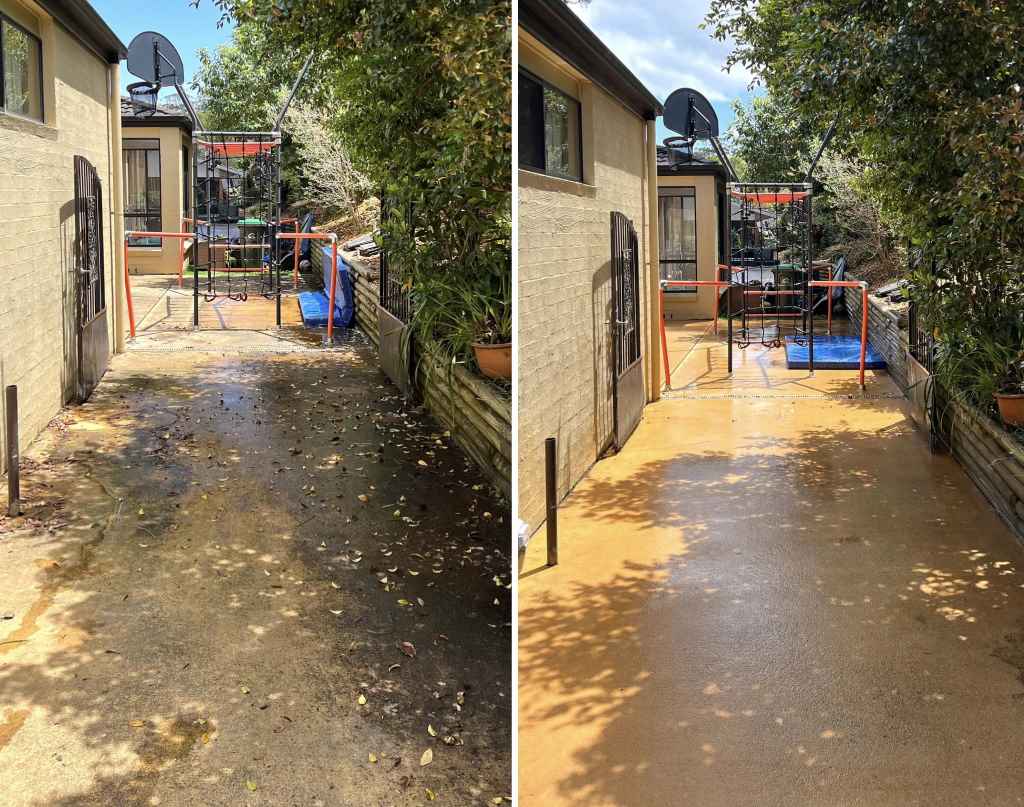
| Concrete driveway or path | Pressure washing | Durable surface suited to high-pressure cleaning |
| Pavers | Pressure washing (care with jointing sand) | Effective but avoid dislodging joint sand with excessive pressure |
| Timber decking | Low pressure or soft wash | High pressure raises grain and splinters timber |
| Gutters (exterior) | Low to medium pressure or soft wash | Depends on material and age |
The Risks of Using Pressure Washing in the Wrong Place
This section is worth paying attention to, because the damage caused by inappropriate pressure washing is not always immediately visible.
Rendered walls
Modern rendered walls use acrylic or texture coat products that are bonded to the substrate rather than mechanically fixed. High-pressure water can penetrate behind the render coating, cause it to lift and blister, and introduce moisture that leads to mould inside the wall cavity. The visible result looks fine at first. The problem shows up weeks later as the moisture works through.
Tiled roofs
Pressure washing a tiled roof can crack brittle tiles, especially on older homes. More significantly, high pressure forces water up under the tile edges and into the bedding mortar on the ridge. This introduces moisture directly into areas that should stay dry, and on the Central Coast, where humidity is already high, this accelerates timber rot in the roof cavity.
Painted surfaces
Once paint is stripped by pressure washing, the surface underneath is exposed to moisture and UV. Repainting is expensive. The cleaning job that was supposed to improve your home’s appearance can end up requiring a full repaint to fix.
Protect your home’s exterior surfaces with the right approach. Read more about our house soft washing service and how we safely remove mould and grime from Central Coast homes.
Why the Central Coast Environment Matters
On the Central Coast, the combination of warm temperatures, humidity, salt air from the ocean and abundant moisture creates ideal conditions for mould, mildew, algae and lichen to grow on exterior surfaces.
This growth is the underlying problem on most dirty-looking homes. A pressure wash removes what is visible on the surface but leaves the organism alive in the substrate. Within one or two wet seasons, the growth returns. Soft washing treats the organism, which is why results last meaningfully longer in the coastal environment.
Salt film is another factor specific to coastal properties. A surface coating of salt from sea spray creates a slightly rough texture on glass, render and tile surfaces that traps further debris. Soft washing solutions effectively break down salt deposits in a way that water pressure alone cannot.
Figure 3: Central Coast Environmental Factors and Their Impact on Surface Cleaning
| Environmental Factor | Surfaces Most Affected | Best Cleaning Response |
| High humidity | Render, painted surfaces, timber | Soft wash to kill mould at source |
| Salt air (coastal proximity) | Glass, render, Colorbond, tiles | Soft wash or specialist salt removal solution |
| Pollen seasons (spring) | Glass, solar panels, render | Soft wash, rinse, repeat seasonally if needed |
| Bird activity | Solar panels, gutters, roof tiles | Soft wash and gutter clean |
| Tree coverage and sap | Roof tiles, gutters, driveways | Soft wash for tiles, pressure for driveways |
How to Know What Your Property Needs
If you are unsure which method is right for your home, the material your exterior walls are made from is the most reliable guide.
- Rendered walls or texture coat: soft washing.
- Painted timber, hardiplank or fibre cement: soft washing.
- Brick (older homes, especially pre-1980s): soft washing or low pressure.
- Tiled or metal roof: soft washing only.
- Concrete driveway, paths or retaining walls: pressure washing.
- Pavers: pressure washing with care.
If a company quotes you for pressure washing your rendered walls without mentioning soft washing as an alternative, that is a signal worth paying attention to. Rendered walls and high pressure are not a combination any experienced operator would recommend.
Still unsure what your property needs? Read our full guide to house soft washing for a more detailed look at the process and what to expect from a professional service.
Frequently Asked Questions
Q: Is soft washing safe for all painted surfaces?
Soft washing is safe for the vast majority of painted exterior surfaces when carried out by an experienced operator using correctly diluted solutions. The cleaning compounds used are designed to treat biological growth without attacking paint or coatings at normal application concentrations. An experienced operator will test on an inconspicuous area first if there is any uncertainty about the paint type or age.
Q: Can pressure washing damage my driveway?
Concrete driveways are well suited to pressure washing, but excessive pressure on older concrete or pavers with loose jointing sand can dislodge the sand between paver joints. A skilled operator adjusts the pressure and distance based on the surface condition. Driveways that are already cracked or have loose sections should be assessed before high-pressure cleaning is applied.
Q: Do I need to be home when the cleaning takes place?
For most exterior cleaning jobs on the Central Coast, you do not need to be present as long as the team has access to the areas being cleaned and a water supply. We will let you know in advance what access we need. Some homeowners prefer to be there for the initial visit, and we always welcome that.
The Bottom Line on Choosing the Right Method
Soft washing and pressure washing are both legitimate exterior cleaning methods. The key is matching the method to the surface. Pressure washing applied to the wrong surface causes real, costly damage. Soft washing applied to surfaces that need biological treatment produces results that last noticeably longer than pressure washing alone.
On the Central Coast, where the environment actively encourages biological growth on exterior surfaces, soft washing is the right default for walls, roofs and most other exterior surfaces. Pressure washing belongs on driveways and concrete.
If you are not sure which your home needs, we are happy to talk it through with you before you commit to anything.